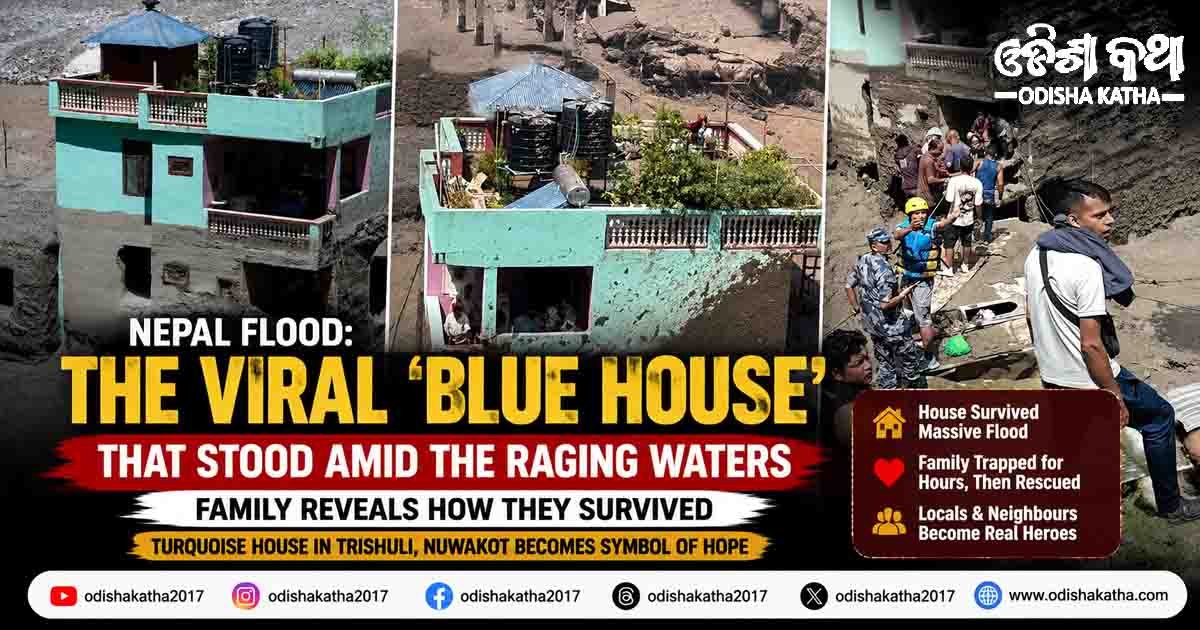
A small green house standing almost alone amid a landscape of mud, rocks and destruction has become one of the most striking images from the devastating floods in Nepal. Videos and photographs of the house spread rapidly across social media after the August 26 flash floods along the Trishuli River in Nepal’s Nuwakot district. While buildings, vehicles and other belongings around it were swept away or badly damaged, the green-painted house remained standing.
But behind the viral images is an even more remarkable story. Six people were inside the house when the flood struck. As water and debris surrounded the building, the family moved to a higher part of the house and waited, unsure whether the structure would survive. They eventually made it out safely, with the family saying that neighbours played a crucial role in their rescue.
For the people inside, the house was not a viral sensation at that moment. It was simply the place where they were desperately trying to stay alive.
How the Viral Green House Survived the Flood
The house belongs to Prakash Pandey and Laxmi Pandey and is located in the Trishuli area of Nuwakot.
When the floodwaters began rushing through the area, the situation changed extremely quickly. The Trishuli River had swollen dramatically, carrying enormous amounts of water, mud, rocks and debris. Nearby structures were damaged as the flood swept through the area.
The Pandey family realised that remaining on the lower levels of the house was becoming dangerous. They moved higher inside the building while watching the destruction around them. The house shook as the floodwaters and debris moved past it. For the family, it was a terrifying wait.
Six People Were Trapped Inside
According to Laxmi Pandey’s account, six people were inside the house during the most dangerous part of the flooding. The family had moved to the upper portion of the building after floodwater entered the house.
The situation became even more frightening when nearby houses began collapsing. Laxmi later recalled the experience as something that made her feel they had been given another chance at life.
Speaking about the incident, she described their survival as being like a “second birth.” The family had no way of knowing how long the building would remain standing. All they could do was stay together and wait.
Neighbours Risked Their Lives to Rescue Them
The rescue of the family is another important part of the story. According to the family’s account, neighbours risked their lives to reach the house and bring the trapped people to safety. Reports say rescuers used a pipe and rope to reach the family from the other side after the most dangerous phase of the flooding had passed. Laxmi Pandey also told ANI that the family was rescued and saved by their neighbours.
At the same time, photographs from the aftermath show uniformed rescue personnel and local people working around the damaged property. Nepal Army personnel were also involved in wider rescue and recovery operations in the affected area. So while the family’s own account credits neighbours with reaching and rescuing them, their survival took place amid a much larger emergency response involving local communities and rescue personnel.
The House Was Not Completely Undamaged
The viral images can make it appear as though the building escaped the disaster without any damage.
That is not the case. The house remained standing, but the lower portions of the property were badly affected.
The family’s shop and storage area were damaged, while vehicles and other belongings were also lost or buried under mud and debris.
The surrounding area suffered even greater destruction. Roads were damaged, homes disappeared and huge quantities of mud and debris covered the landscape. The fact that the main structure remained standing is what made the house so visually remarkable.
Why Did the Green House Survive?
This is probably the question that has fascinated people the most. How could this relatively small house remain standing when so much around it was destroyed? The house is around 40 years old, and reports have pointed to its construction and structural design as possible factors behind its survival. Some reports have described it as having a strong reinforced-concrete structure. Its location may also have played an important role.
The house was positioned in such a way that the main force of the debris flow may not have struck the structure in exactly the same way as some of the surrounding buildings. Experts have discussed the combination of structural strength, construction quality and the house’s position relative to the flood flow when explaining why it survived. However, it would be too early to say that one particular feature definitely saved the house.
A proper engineering assessment would be needed to establish exactly why the building withstood the disaster. What is certain is that the structure survived while much of the surrounding area did not.
The Family’s “Second Birth”
For Laxmi Pandey and the other people inside the house, the survival of the building has a very personal meaning. They were not watching the flood from a safe distance. They were inside the house while the water and debris moved around them.
They had already seen neighbouring structures collapse. At one point, they feared that their own home could be next. Laxmi later described their survival as a “second birth”, reflecting how close the family felt they had come to losing their lives. The words also explain why the viral photographs have attracted so much attention.
The house represents more than an unusual piece of architecture. It represents people who survived an extremely dangerous situation.
The Photos Tell Only Half the Story
The first images of the green house mainly showed the building standing amid destruction. But later photographs revealed another side of the story.
People could be seen around the property, dealing with the aftermath and helping those affected. One of the photographs shows rescue personnel and civilians working around the damaged structure. The scene gives a clearer idea of how difficult conditions were after the flood.
Mud covered the ground, buildings had been damaged and access to the area was difficult. The house itself looked almost surreal against the destruction around it. That is why the images quickly became a symbol of the disaster.
A House That Became a Social Media Sensation
Within days of the flood, photographs and videos of the green house began circulating widely online.
People started calling it the “miracle house” and the “green house.” Some viewers were amazed by the building’s apparent strength, while others were more interested in the people visible inside it during the flood.
The images created an unusual combination of curiosity and emotion. People wanted to know two things:
How did the house survive?
And more importantly:
Did the people inside survive?
The answer to the second question was eventually confirmed; the people inside survived.
Nepal’s Wider Flood Disaster
The story of the green house is only one small part of a much larger tragedy. The August 26 disaster caused enormous destruction across parts of Nepal after a glacial-collapse-related event triggered powerful flooding and debris flows.
Thousands of people have been affected, while rescue and recovery teams have been working in extremely difficult conditions. As of September 1, reports were putting the death toll at more than 900, with thousands of people still reported missing. Nepal’s authorities and security forces have been conducting large-scale rescue and recovery operations across the affected areas.
The disaster has also affected infrastructure, roads, hydropower facilities and communities along the affected river systems. Against this devastating background, the survival of one house and the six people inside it has offered a rare story of hope.
What Happens to the House Now?
Although the main structure survived, the Pandey family has lost a significant amount of property. The lower portion of the building, including the family’s shop and storage area, was badly damaged. Many belongings were destroyed or buried under mud.
The family has therefore survived the immediate danger but now faces the difficult task of rebuilding their lives. Prakash Pandey has said that the family intends to try to start again after the disaster. That may be one of the most important parts of this story. Survival is only the beginning.
After the floodwaters disappear, families still have to rebuild homes, businesses and their daily lives.
A Symbol of Survival
The green house in Trishuli has become one of the most recognisable images from the Nepal floods. It stood while the world around it was transformed by water, mud and debris. But the real story is not simply about a building that survived.
It is about six people who were trapped inside, a family that feared the worst, neighbours who helped reach them and rescue personnel working amid a wider disaster response. The house may have become famous because of its unusual survival.
The family remembers it for a very different reason. For them, it is the place where they waited for the flood to pass; and where they were given another chance to live. As Laxmi Pandey put it, their survival felt like a “second birth.” And that is perhaps the most powerful story behind Nepal’s viral green house.
Disclaimer
This article has been prepared for informational and human-interest purposes using publicly available reports from established media organisations and statements attributed to people connected with the incident. Details surrounding the disaster and rescue operations may change as authorities continue their work. Odisha Katha has tried to present the story responsibly and avoid unnecessary speculation or sensationalism. Our thoughts are with everyone affected by the Nepal floods and with families still waiting for news of their loved ones.