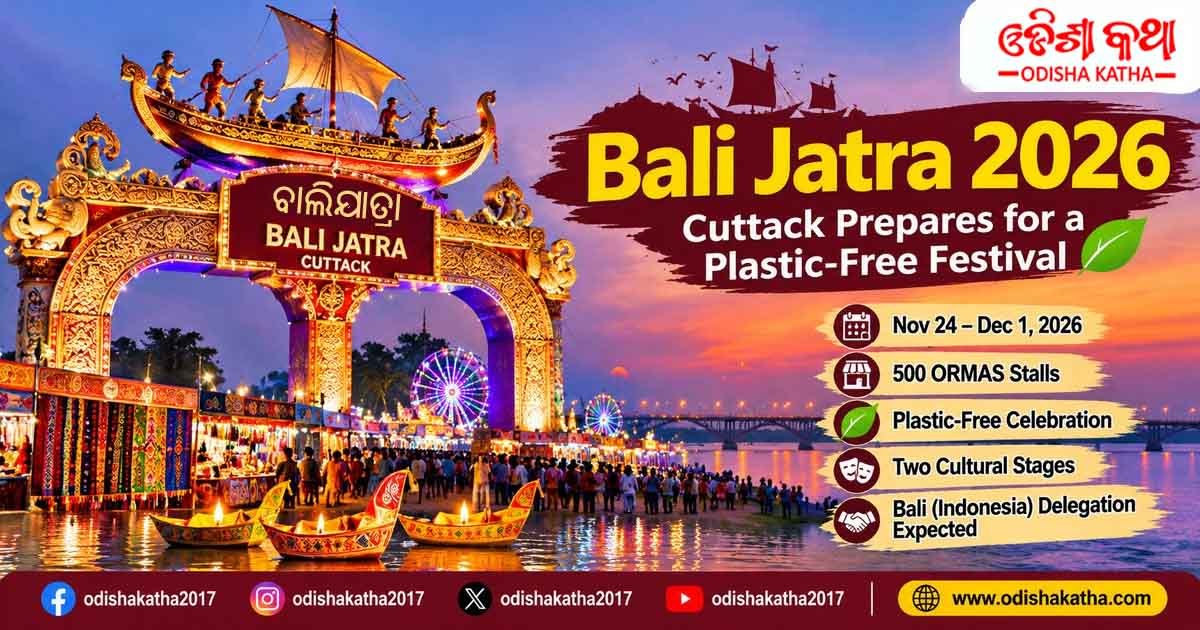
Cuttack is getting ready to welcome one of Odisha’s most celebrated cultural events, Bali Jatra 2026, which will take place from November 24 to December 1 on the banks of the Mahanadi River. This year’s edition is expected to bring together Odisha’s traditional culture, handloom, handicrafts, food, trade and entertainment, with a renewed focus on environmental protection and the state’s historical connections with Southeast Asia.
The Odisha government has proposed an allocation of ₹10 crore for organising the festival. Among the major announcements are plans to make Bali Jatra a plastic-free event, the establishment of 500 stalls by the Odisha Rural Development and Marketing Society (ORMAS), two dedicated stages for cultural programmes and the expected participation of a delegation from Bali, Indonesia.
Preparations for the festival were reviewed at a high-level meeting chaired by Odisha Culture Minister Suryabanshi Suraj on November 3. The discussions covered the festival arrangements, cultural attractions and initiatives to showcase Odisha’s rich heritage to visitors.
Bali Jatra 2026: Dates and Important Details
Bali Jatra is organised annually in Cuttack to celebrate Odisha’s historical maritime connections with Bali and other parts of Southeast Asia. The festival traditionally begins around Kartika Purnima, when people remember the voyages undertaken by ancient Kalinga sailors.
Here are the important details for this year’s celebration:
Event: Bali Jatra 2026
Location: Bali Jatra Ground, Cuttack, Odisha
Dates: November 24 to December 1, 2026
Duration: Eight days
Proposed government allocation: ₹10 crore
Special initiative: Plastic-free festival
ORMAS participation: 500 stalls
Cultural programmes: Two dedicated stages
International participation: A delegation from Bali, Indonesia, is expected
Visitors should follow official announcements from the Cuttack district administration for updates regarding entry arrangements, traffic restrictions, parking and individual programme schedules.
Why Is Bali Jatra Celebrated in Odisha?
The name Bali Jatra literally means ‘Voyage to Bali’. The festival commemorates the maritime history of ancient Kalinga, whose traders and sailors travelled across the Bay of Bengal to establish commercial and cultural connections with Bali and other Southeast Asian regions.
These historical journeys are closely associated with Odisha’s traditional maritime identity. Traders carried goods, knowledge, art, textiles and cultural practices across the sea, helping establish connections that influenced communities on both sides.
One of the most recognisable traditions associated with the occasion is Boita Bandana. On Kartika Purnima, people gather near rivers, ponds and other water bodies to float small boats made from paper, banana bark or other materials. These symbolic boats represent the voyages of ancient Odia sailors.
Bali Jatra brings this history into public life through a large annual fair featuring traditional products, food, cultural performances and commercial activities. It has become an important attraction for residents, tourists, traders and visitors from different parts of India.
500 ORMAS Stalls to Promote Odisha’s Handloom and Handicrafts
One of the major attractions of Bali Jatra 2026 will be the participation of ORMAS, which plans to establish 500 stalls at prominent locations across the fairground.
These stalls will provide a platform to showcase Odisha’s traditional handloom, handicrafts and other rural products. Visitors will have opportunities to explore products made by artisans, weavers, self-help groups and rural entrepreneurs.
The initiative is particularly significant for people involved in traditional crafts and small-scale businesses. Large public events such as Bali Jatra can help local producers reach new customers, promote their work and generate additional business opportunities.
Odisha’s handloom and handicraft traditions include a wide range of products, from traditional textiles and decorative items to handmade crafts and locally produced goods. Presenting these products at a major public festival can also help introduce younger generations and visitors from outside the state to the state’s craftsmanship.
Bali Jatra 2026 to Promote a Plastic-Free Celebration
Environmental protection is another important focus of this year’s festival. The state government has announced plans to organise Bali Jatra as a plastic-free event. The initiative is intended to reduce plastic waste generated by food stalls, commercial establishments and the large number of visitors expected at the fair.
The use of alternatives such as sal-leaf plates and cloth bags has been discussed as part of the broader effort to make the festival more environmentally responsible.
Managing waste at a large public gathering is a considerable challenge. Food packaging, disposable containers, plastic bags and other waste materials can accumulate quickly when thousands of people visit a fairground.
A successful plastic-free initiative will therefore depend on cooperation between organisers, stall owners, vendors, visitors and sanitation teams. The availability of suitable alternatives and proper waste collection arrangements will be important for achieving the objective.
If implemented effectively, the initiative could also provide an example for other large festivals and public gatherings in Odisha.
Bali Delegation Expected to Attend the Festival
Bali Jatra 2026 is also expected to receive an international cultural dimension through the participation of a delegation from Bali, Indonesia.
The historical connection between Bali and ancient Kalinga is central to the identity of the festival. The expected delegation’s participation could provide an opportunity to highlight the cultural similarities and historical links between Odisha and Indonesia.
A special Cuttack-in-Cuttack pavilion is planned to showcase these connections. The presentation is expected to include information about shared heritage, food, clothing, language-related similarities and traditional manuscripts.
A digital information wall is also planned to help visitors understand the historical relationship between the two regions.
Such initiatives can make Bali Jatra more than a commercial fair by encouraging visitors to explore the history behind the celebration and Odisha’s contribution to maritime and cultural exchange.
Two Stages for Cultural Programmes
Cultural entertainment will remain an important part of Bali Jatra 2026. Two dedicated stages are planned for cultural performances during the festival. These stages are expected to provide opportunities to showcase Odisha’s music, dance and performing arts, along with other cultural presentations.
Bali Jatra traditionally attracts visitors of different age groups, making cultural programmes an important part of the overall experience. The detailed artist lineup, performance timings and programme schedule should be followed through official announcements as they become available.
Pallishree Mela and Stall Allotment: An Important Development
Another important aspect of this year’s Bali Jatra is the Pallishree Mela, which provides a platform for rural entrepreneurs, self-help groups, farmers, artisans and producer organisations.
However, the stall-allotment process has recently attracted attention after reports that a portion of the stalls would be offered through online bidding.
Some rural entrepreneurs have expressed concern that a bidding-based system could make participation difficult for smaller businesses that have limited financial resources.
The administration, however, has clarified that two-thirds of the proposed 550 stalls have been reserved for self-help groups, producer groups, farmer producer organisations and artisans, with these stalls to be allotted free of cost. The remaining one-third has been kept for bidding.
The issue highlights the importance of maintaining the original purpose of Pallishree Mela: supporting rural enterprises and giving traditional producers access to larger markets.
Ensuring that genuine rural businesses receive meaningful opportunities will be important for preserving the fair’s inclusive character.
Bali Jatra 2026: More Than Just a Fair
Bali Jatra is an important part of Odisha’s cultural identity. It connects the present generation with the maritime history of ancient Kalinga while providing opportunities for artisans, traders, entrepreneurs and cultural performers.
The 2026 edition brings several important themes together, including environmental responsibility, rural entrepreneurship, traditional craftsmanship and international cultural connections.
The proposed ₹10 crore allocation, 500 ORMAS stalls, plastic-free initiative, two cultural stages and expected participation from Bali, Indonesia, indicate an effort to give this year’s festival a wider cultural and international appeal.
For visitors, Bali Jatra will offer an opportunity to experience traditional products, local food, cultural performances and the vibrant atmosphere of Cuttack. For Odisha’s artisans and rural producers, it can provide an important platform to showcase their work and connect with customers.
As November 24 approaches, attention will increasingly turn towards the final arrangements, cultural programme announcements and visitor facilities.
Bali Jatra 2026 is expected to once again bring Cuttack alive with the colours of Odisha’s heritage, reminding people that the state’s connection with the wider world has roots stretching back centuries.
Disclaimer: This article is published by Odisha Katha for general information and awareness. Event arrangements, schedules and other details may change according to official decisions. Readers are advised to follow announcements from the concerned authorities for the latest information.